
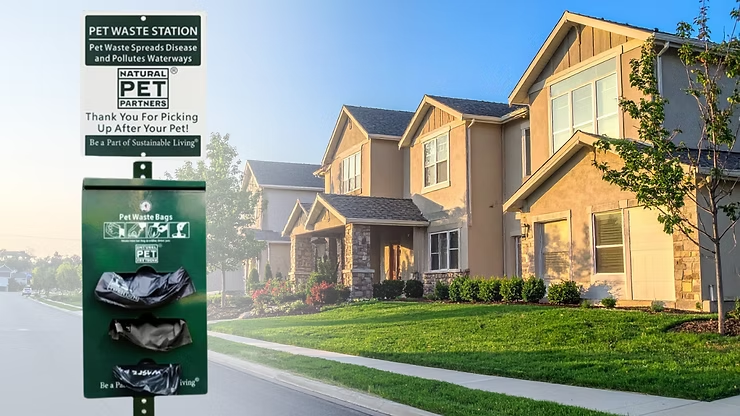
There's a moment every HOA board dreads. You open your inbox on a Monday morning, and there are seven new complaint emails all about the same thing. Dog waste on the walking path. Again.
It's not glamorous. It's not the kind of issue anyone ran for the board to solve. But in communities across Atlanta, unmanaged pet waste has quietly become one of the top drivers of resident dissatisfaction, board burnout, and even property value concerns. The good news? One local HOA figured out a better way, and the results were hard to argue with.
The Problem Was Bigger Than It Looked
When this Atlanta-area community first started tracking resident complaints, the board assumed the usual suspects would top the list: parking disputes, noise, landscaping disagreements. What they found instead surprised them.
Pet waste complaints - unbagged messes on common areas, overflowing or missing disposal stations, the general sense that no one was enforcing anything - accounted for nearly a third of all grievances logged over six months.
More telling was what those complaints really represented. Residents weren't just annoyed about stepping into something unpleasant. They were frustrated by the feeling that the community wasn't being well-managed. Pet waste was visible evidence of a deeper concern: Does anyone actually care about this place?
That realization changed how the board approached the problem.
The Shift: From Reactive to Proactive
For years, the board had handled pet waste the way most HOAs do — reactively. Post a reminder in the newsletter. Send a strongly-worded email blast. Maybe add a sign near the dog walk area. Hope for the best.
The cycle was predictable and exhausting.
The turning point came when the board stopped treating this as a behavior problem and started treating it as an infrastructure problem. The question shifted from "How do we get residents to comply?" to "How do we make compliance the easiest, most natural choice?"
That's when they brought in a professional Pet Waste Station Service and everything changed.
What Professional Pet Waste Management Actually Looks Like
It's easy to assume a pet waste station is just a plastic post with a bag dispenser bolted to it. But professional HOA pet waste management is a system, not a product.
Here's what the community implemented:
- Strategically placed stations at every major entry and exit point on walking paths, near dog-friendly green spaces, and along the community perimeter, positioned so that a resident never has to walk more than a short distance to find one
- Consistent servicing schedules that kept stations fully stocked and waste receptacles emptied before they could overflow - a detail that sounds minor but makes an enormous difference in perception
- USDA biobased pet waste solutions for the bag dispensers and waste treatment products, replacing conventional plastics and chemicals with certified eco-friendly alternatives
- Clear, friendly signage that reminded residents of community standards without feeling punitive or accusatory
The difference between a well-maintained station and a neglected one is night and day. A neglected station - bags always empty, the bin overflowing - actually makes the problem worse by signaling to residents that management doesn't follow through. A well-serviced station communicates the opposite.
Why USDA Biobased Solutions Mattered to This Community
One detail worth unpacking is the choice to use USDA biobased pet waste solutions. For this particular board, it wasn't just a feel-good decision; it became a genuine community differentiator.
Atlanta residents, particularly in areas like Fulton County, are increasingly environmentally conscious. When the HOA began highlighting its use of USDA biobased pet waste solutions in Atlanta community newsletters and on signage, several things happened:
- Resident pride in the community increased - people felt good about where they lived
- The board's credibility went up because the decision signaled thoughtfulness, not just compliance
- It gave pet owners a positive story to connect with, rather than feeling targeted by enforcement
Sustainability doesn't have to be a buzzword. When it's baked into the infrastructure - into the actual bags residents pull from the dispenser - it becomes real and tangible in a way that a policy statement never can.
The Numbers: What an 80% Drop Actually Means
Eighteen months after implementing professional HOA pet waste management, the board ran the numbers.
Pet waste-related complaints had fallen by 80%. But the ripple effects went further:
- Overall, resident satisfaction scores improved, with common area upkeep cited as a notable positive
- Board meeting time spent on complaint follow-up dropped significantly, freeing up energy for more strategic community priorities
- New resident inquiries mentioned the cleanliness of common areas as a factor in their decision to join the community
- The community's reputation in local real estate circles quietly improved
None of this happened because residents suddenly became more responsible. It happened because the system made responsible behavior easy and the community's standards visible and credible.
What Other HOA Boards Can Learn From This
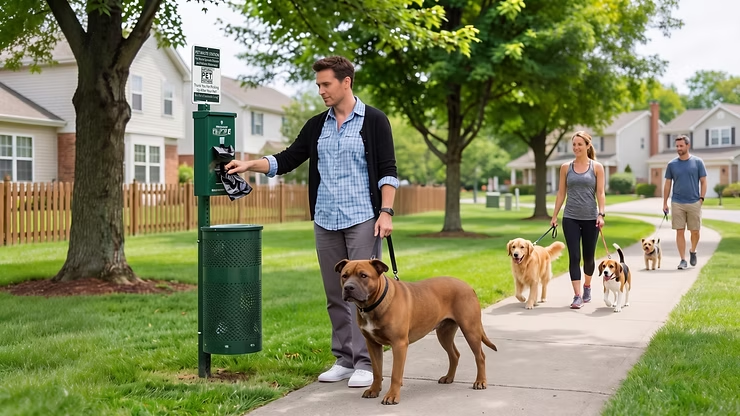
If you're an HOA board member, property manager, or community decision-maker reading this, a few things are worth sitting with.
First, the cost of inaction is real - it's just spread out and invisible. Every complaint email costs board time. Every frustrated resident who doesn't renew their lease or sell their unit due to dissatisfaction has a financial impact. The cost of professional pet waste station service in Fulton County or anywhere in the Atlanta area is often far smaller than the cumulative cost of doing nothing.
Second, residents respond to the effort they can see. A freshly stocked station, a clean receptacle, eco-conscious bags - these are physical signals that someone is paying attention. You can't buy that trust with a newsletter.
Third, the "near me" problem is solvable. One of the most common objections boards raise is not knowing where to find quality, reliable service. Searching for a trusted pet waste station service near me in the Atlanta metro area is a good starting point, but vetting providers for servicing reliability and product quality matters just as much as proximity. Ask about their restocking schedules, what happens if a station is vandalized or needs repair, and whether they offer USDA biobased pet waste solutions - that last detail often signals a provider who's invested in doing things right.
A Small Problem With a Surprisingly Large Solution
Pet waste isn't the most inspiring topic to build a community strategy around. But it's one of those issues where getting it right has outsized returns in resident satisfaction, in board efficiency, in community pride, and yes, in property values.
The HOA in this story didn't do anything dramatic. They didn't launch an enforcement campaign or levy fines. They simply built a system that made the right behavior easy, maintained it consistently, and chose products and partners that reflected the community's values.
Eighty percent fewer complaints later, they'd be the first to tell you: it was one of the best decisions they made.
If your community is still in the "strongly-worded email" phase of pet waste management, it might be time to think bigger. Atlanta has options and the results speak for themselves.
Call us today for a free quotation. Your residents’ health is worth it!
CoPS on Doody keeps communities clean across Northern Virginia, Washington, DC, and suburban Maryland. We provide full-service pet waste management, including fall inspections, station repairs, and common-area cleanups — with USDA-certified 41% bio-based bags and liners included in our service price. You can order our bags through our sister company, Foresight USA at www.foresightusa.com
© CoPS on Doody 2026

.png)
.png)


