The Pet-Friendly Amenity Checklist Every Property Manager Needs Before Listing
Pet-friendly is one of the most searched filters on every major apartment listing platform. It is also one of the most overused claims in residential property marketing applied to buildings where the policy technically allows dogs but the infrastructure makes living with one a daily frustration. The gap between "pet-friendly" on a listing and pet-friendly in practice is precisely where lease renewals are lost, negative reviews are written, and resident retention strategies fall apart.
According to the American Pet Products Association's 2023-2024 National Pet Owners Survey, approximately 66% of U.S. households own at least one pet. In the apartment and HOA market, this translates directly into a large and growing segment of prospective residents who are specifically filtering for pet-friendly properties and who will evaluate the actual pet infrastructure during the tour, during move-in, and throughout the lease term. A property that claims the label without meeting the expectation does not retain these residents. It loses them to the property across the street that gets it right.
This checklist gives property managers in DC metro and Atlanta the five-category framework to audit their pet amenity infrastructure before any listing goes live and to identify the specific gaps that, if left unaddressed, will generate complaints, drive early move-outs, and undermine the pet-friendly premium the property is trying to command.
TL;DRKey Takeaways
- Pet-friendly listings that cannot deliver on the amenity promise in practice generate the highest rate of early lease terminations and negative reviews.
- The five amenity categories that determine whether a property is genuinely pet-friendly: waste infrastructure, designated pet areas, interior policy clarity, community cleanliness standards, and vendor accountability.
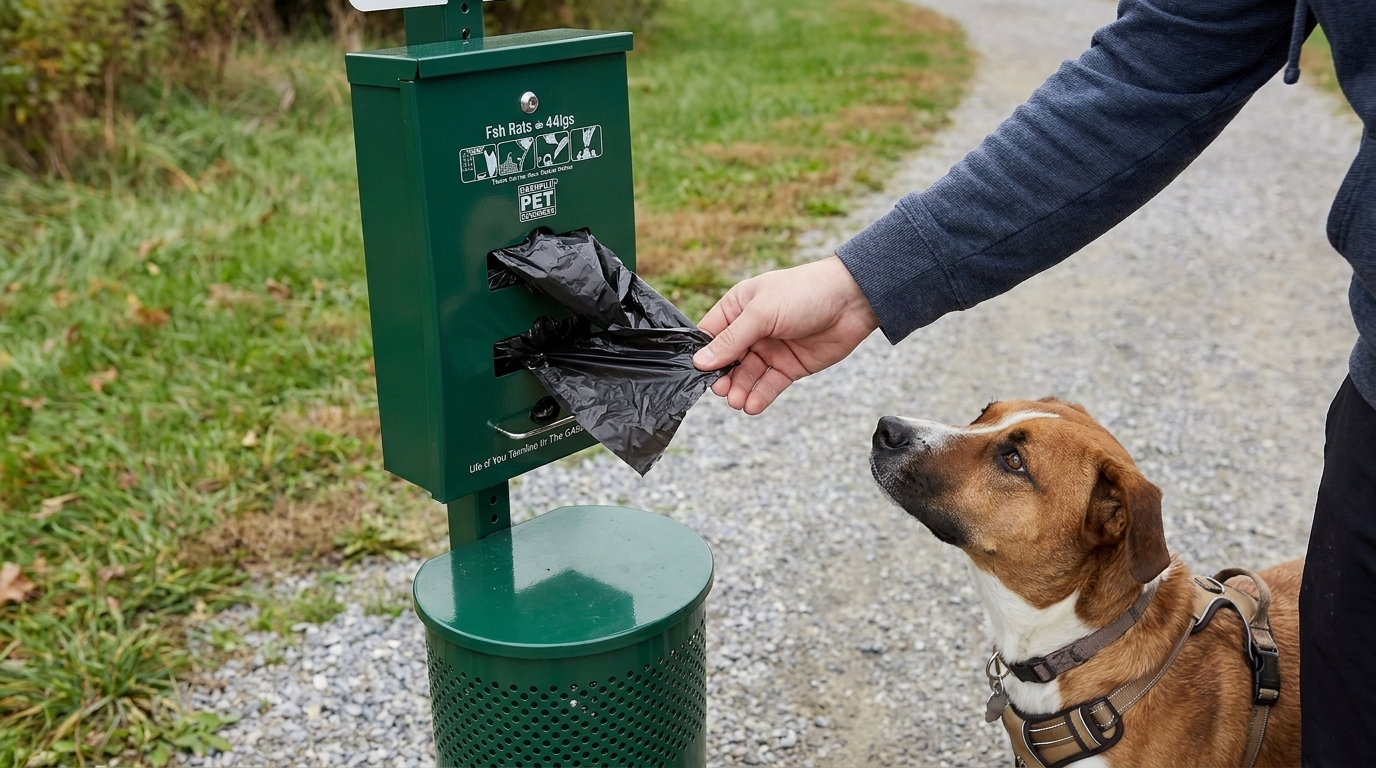
- Pet waste station management is the single highest-impact and most frequently under-resourced category in the checklist.
- A pre-listing audit of all five categories takes less than two hours and identifies the gaps that will generate complaints before the first pet-owning resident moves in.
- The most common listing credibility gap is claiming dedicated pet areas or managed waste service without the vendor accountability structure to back either claim.
- Properties that get all five categories right command a measurable leasing advantage in the DC metro and Atlanta rental markets.
Why 'Pet-Friendly' on a Listing Is a Promise, Not a Description
Pet-owning apartment hunters do not search 'pet-friendly' and then forget about it after signing the lease. They are evaluating the property's actual pet infrastructure at every touchpoint during the tour, when they ask what happens when the waste station bags run out, when they walk the property with their dog for the first time and count the available stations, and six months into the lease when they file the third complaint about overflowing bins in sixty days.
The listing claim creates an expectation. The property's operational infrastructure either meets that expectation or it does not. When it does not, the consequences are predictable: online reviews that specifically cite inadequate pet amenities, lease non-renewals from residents who would otherwise have stayed, and lost prospective residents who read those reviews before submitting an application.
| Listing Claim |
Resident Expectation |
Common Reality Gap |
| Pet-friendly community |
Stocked stations on every walking route, clean designated relief areas, no waste in common areas |
One station per building entrance, empty dispensers, visible ground waste in high-traffic areas |
| Dog park on property |
Fenced, drained, lit, maintained surface, waste station inside the enclosure |
Unfenced grassy area with no station, no lighting, and no maintenance schedule |
| Dedicated pet waste stations |
Stations along walking routes, regularly serviced, stocked bags, clean bins |
Two stations near the leasing office, serviced weekly, empty by Thursday |
| Pet concierge services |
Defined service list, booking process, vetted provider list, resident communication |
A directory of pet businesses from three years ago printed in the welcome packet |
| Pet washing station |
Functional drain, soap dispenser stocked, drying area, cleaning schedule |
Hose bib outside a utility entrance with a sign that says 'pet wash area' |
The Credibility Standard
Pet-owning residents in DC metro and Atlanta — particularly in the 25-to-40 age bracket that drives the highest apartment demand in both markets — research pet amenities specifically before and after touring. Review platforms, Reddit community threads, and social media responses to listings all surface pet amenity quality gaps quickly. The listing claim and the operational reality must align before the listing publishes.
The Five Pet Amenity Categories And Why Each One Is a Leasing Variable
A genuinely pet-friendly community delivers across five distinct amenity categories. Each category has observable, auditable conditions. Each one is either ready to support the listing claim or it is not. The following checklists are designed to be used as a pre-listing walk-through ideally completed at least two weeks before any pet-friendly listing language goes live, to allow time to address the most critical gaps before prospective residents arrive for tours.
| Checklist Item |
Status |
Priority |
| Minimum one station per 50-75 pet-owning units installed and functional |
[ ] Pass / Flag |
Critical |
| Stations positioned along primary dog walking routes, not only near entries |
[ ] Pass / Flag |
Critical |
| All bag dispensers fully stocked and dispensing correctly |
[ ] Pass / Flag |
Critical |
| All waste bins empty or below 75% capacity |
[ ] Pass / Flag |
Critical |
| No visible ground waste in common areas, walkways, or courtyard |
[ ] Pass / Flag |
Critical |
| Dedicated managed service provider confirmed (not landscaper or maintenance) |
[ ] Pass / Flag |
Critical |
| Service completion reporting received after last three service visits |
[ ] Pass / Flag |
High |
| Service frequency appropriate to property's pet population density |
[ ] Pass / Flag |
High |
| Missed-service credit policy confirmed in writing with vendor |
[ ] Pass / Flag |
High |
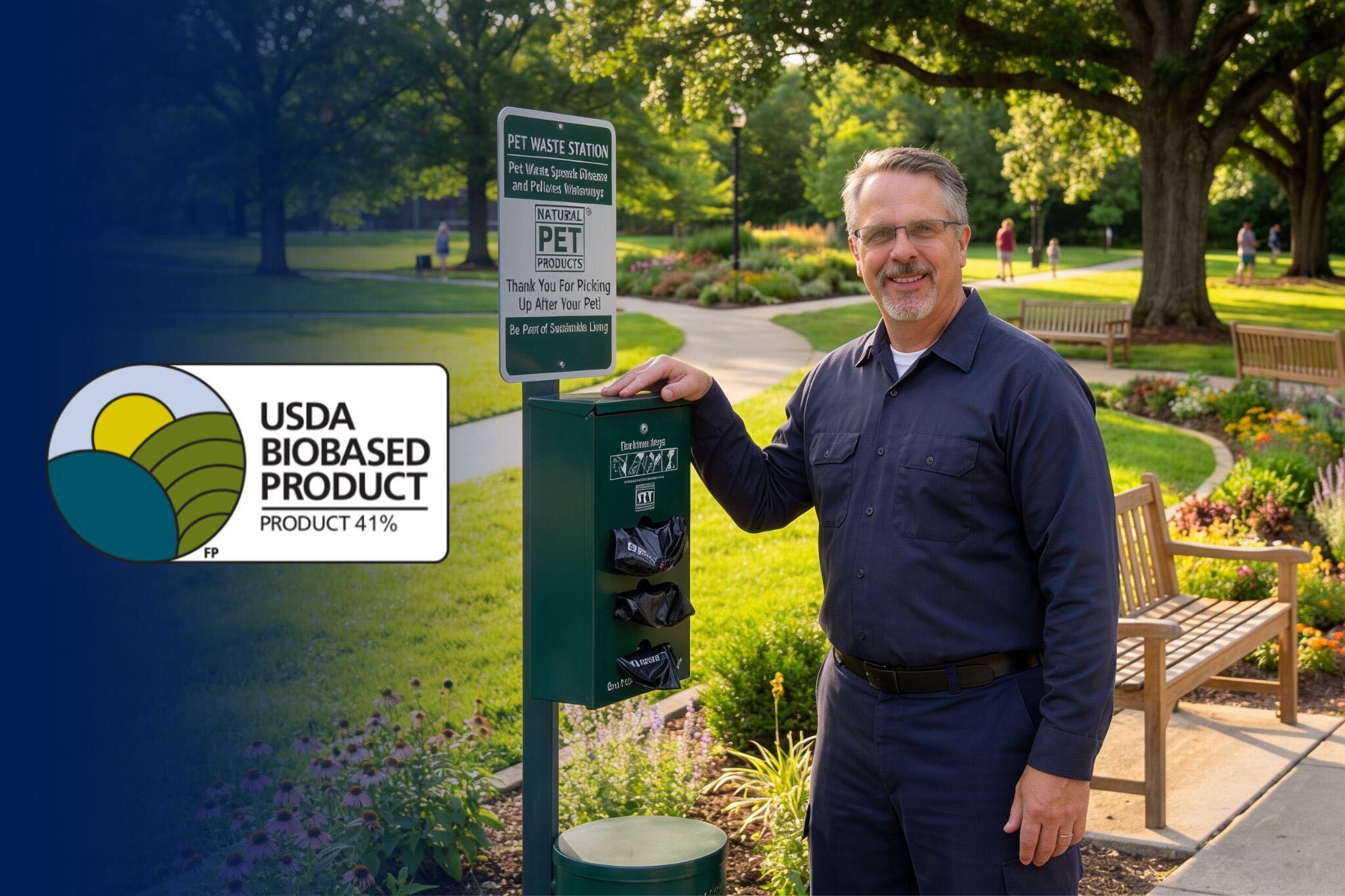
| USDA Certified Biobased bags specified in vendor service agreement |
[ ] Pass / Flag |
Medium |
| Vendor issue response window defined (3 business hours or better) |
[ ] Pass / Flag |
High |
| Station condition inspected within last 7 days by property staff |
[ ] Pass / Flag |
Medium |
| Checklist Item |
Status |
Priority |
| At least one designated relief area clearly marked and maintained |
[ ] Pass / Flag |
Critical |
| Relief area surface appropriate for use (natural or artificial turf, gravel not bare dirt) |
[ ] Pass / Flag |
High |
| Relief area drained — no standing water or muddy conditions |
[ ] Pass / Flag |
High |
| Pet waste station inside or immediately adjacent to each relief area |
[ ] Pass / Flag |
Critical |
| Relief area visible from the property without being in a secluded dead zone |
[ ] Pass / Flag |
Medium |
| If dog park or run is listed: perimeter fencing complete with no gaps |
[ ] Pass / Flag |
Critical |
| Dog park surface safe and maintained (no exposed hardware, broken edging, mud pits) |
[ ] Pass / Flag |
High |
| Dog park waste station inside the enclosure, stocked and serviced |
[ ] Pass / Flag |
Critical |
| Night lighting in designated pet areas for early morning and evening use |
[ ] Pass / Flag |
High |
| No signage referring to pet areas that contradicts listing language |
[ ] Pass / Flag |
Medium |
| Checklist Item |
Status |
Priority |
| Pet policy document current and reflects actual enforcement practice |
[ ] Pass / Flag |
Critical |
| Breed and weight restrictions stated explicitly in listing and lease addendum |
[ ] Pass / Flag |
Critical |
| Pet deposit and fee amounts stated in listing — no 'contact us for details' |
[ ] Pass / Flag |
High |
| Non-refundable pet fee vs. refundable pet deposit distinction documented |
[ ] Pass / Flag |
High |
| Monthly pet rent amount disclosed in listing or tour materials |
[ ] Pass / Flag |
High |
| Elevator and lobby pet access rules communicated to residents and prospects |
[ ] Pass / Flag |
Medium |
| Pet registration process defined and communicated at lease signing |
[ ] Pass / Flag |
High |
| Assistance animal accommodation policy current and reviewed by legal counsel |
[ ] Pass / Flag |
Critical |
| Lease pet addendum reviewed and updated within the last 12 months |
[ ] Pass / Flag |
High |
| Checklist Item |
Status |
Priority |
| Common area walkways free of visible pet waste at time of tour |
[ ] Pass / Flag |
Critical |
| Courtyard and lawn areas inspected and cleared within last 48 hours |
[ ] Pass / Flag |
Critical |
| No persistent odor in high-traffic outdoor areas near pet relief zones |
[ ] Pass / Flag |
High |
| Common area cleaning vendor confirmed and on active scheduled service |
[ ] Pass / Flag |
High |
| Pet-adjacent areas included in common area cleaning scope (near stations, relief areas) |
[ ] Pass / Flag |
High |
| Trash can liners in common area bins replaced on defined schedule |
[ ] Pass / Flag |
Medium |
| Seasonal odor control addressed in high-usage months (spring and summer) |
[ ] Pass / Flag |
Medium |
| Post-storm or high-rain walkthrough completed to address ground waste displacement |
[ ] Pass / Flag |
Medium |
| Checklist Item |
Status |
Priority |
| Pet waste vendor provides service completion reports after every visit |
[ ] Pass / Flag |
Critical |
| Last three service completion reports on file and reviewed |
[ ] Pass / Flag |
Critical |
| Vendor contract or service agreement in effect and current |
[ ] Pass / Flag |
High |
| Vendor issue response time confirmed in service agreement |
[ ] Pass / Flag |
High |
| Missed-service credit or remedy process defined and documented |
[ ] Pass / Flag |
High |
| Vendor contact for between-visit issues identified and communicated to staff |
[ ] Pass / Flag |
High |
| Vendor performance reviewed in last 90 days by property manager |
[ ] Pass / Flag |
Medium |
| Vendor transition plan exists if current provider fails performance standards |
[ ] Pass / Flag |
Medium |
| Common area cleaning vendor on same accountability framework |
[ ] Pass / Flag |
Medium |
| Pet amenity maintenance schedule posted internally and reviewed quarterly |
[ ] Pass / Flag |
Medium |
The Pre-Listing Pet Amenity Audit Walk-Through in Under Two Hours
The five-category checklist above covers every element that affects whether the property's pet-friendly claim is sustainable over a lease term. The following table gives property managers a compressed, walk-through format for the pre-listing physical audit the items that must be physically verified on-site, not just confirmed over email with a vendor. This walk-through takes under two hours for most apartment communities and HOAs in the DC metro and Atlanta markets.
| What to Check |
Pass Condition |
Flag Condition |
| Count all installed stations |
✔ Every station is on the property map and functional |
✘ One or more stations missing, damaged, or removed |
| Check bag dispenser at each station |
✔ All dispensers loaded and dispensing without jamming |
✘ Any dispenser empty, jammed, or missing the tube insert |
| Check bin capacity at each station |
✔ All bins below 75% capacity |
✘ Any bin at or above capacity — flag for immediate service |
| Walk all primary dog walking routes |
✔ No visible ground waste on any primary route |
✘ Visible waste on any walking path used for daily dog walks |
| Check designated relief areas |
✔ Surface maintained, drained, waste-free, station adjacent |
✘ Muddy, waste-present, unfenced where fencing is listed |
| Check dog park if listed |
✔ Fenced perimeter intact, surface maintained, station inside |
✘ Any fencing gap, surface hazard, or missing interior station |
| Check night lighting in pet areas |
✔ All lights functional in pet walking areas and relief zones |
✘ Any dead or missing lighting in pet-designated zones |
| Confirm vendor service report on file |
✔ Service report from within last 7 days on file |
✘ No service report available or report older than 14 days |
| Smell test in high-traffic areas |
✔ No persistent odor near stations, relief areas, or walkways |
✘ Odor detectable from more than 10 feet from any station |
| Check common area appearance overall |
✔ No waste visible from any leasing tour path |
✘ Any waste visible along the standard leasing tour route |
What Pet Amenity Gaps Actually Do During a Leasing Tour
Property managers who have walked a leasing tour with a pet-owning prospective resident know the exact moment when a pet amenity gap registers. It is not a dramatic confrontation. It is a question 'How often are these stations serviced?' followed by a look at the half-full bin and a mental calculation. It is a prospective resident who stops at an overflowing station, photographs it, and says nothing. It is a follow-up email that never arrives. Pet-owning prospects are conducting a parallel evaluation during every tour. They are assessing the property's commitment to the amenity they searched specifically for. The physical condition of pet waste stations, the cleanliness of walking routes, and the state of designated relief areas communicate that commitment more accurately than any brochure or leasing agent script.
Leasing Insight — DC Metro
In the DC metro market, where a significant number of prospective residents work in federal, legal, or policy environments with heightened attention to detail, pet amenity gaps identified during a tour frequently appear in review platform posts within 72 hours of the visit. Properties that consistently score poorly on pet amenity maintenance in online reviews lose application volume from the exact demographic that drives the highest lease values: professional adults aged 28–42 with dogs.
Leasing Insight — Atlanta
In the Atlanta market, where the multifamily supply pipeline has expanded rapidly in suburban growth corridors including Cherokee, Gwinnett, and Fulton County, pet amenity quality is increasingly a differentiator among competing new-construction and recently renovated properties. Properties that can demonstrate managed, accountable pet waste service before competing properties establish the same standard gain a durable first-mover leasing advantage.
How Pet Amenity Quality Connects to Lease Renewal Rates
The connection between pet amenity quality and lease renewal behavior is not speculative. Pet-owning residents who experience consistent, reliable pet amenity support, including stocked stations, maintained relief areas, and clear community standards are among the most stable lease renewal segments in multi-family housing. They are more difficult to rehouse because pet-friendly inventory is constrained, their moving costs are higher due to pet deposits and fee structures at new properties, and their pets have established routines and outdoor areas.
The same resident who is stable and renewal-likely under good pet amenity conditions is also the resident who generates the most negative reviews and referral deterrence when those conditions fail. The stakes for pet-owning residents are higher than for non-pet residents because their daily life is directly affected by every service miss, every empty dispenser, and every complaint about ground waste that goes unresolved.
Service Start After Signing
7 Days
Vendor Issue Response
3 Bus. Hours
Service Completion Reports
Every Visit
Contract Requirement
None
How far in advance of listing should a property complete the pet amenity audit?
At minimum, two weeks before the listing publishes or before the first scheduled leasing tour. This window allows time to address the most critical infrastructure gaps empty dispensers, damaged stations, missing vendor reports before prospective residents evaluate the property. For properties transitioning to a new pet waste service provider, the standard onboarding timeline is seven days from signed agreement to first service, which means a vendor selection decision made fourteen days before listing provides a full service cycle before the first tour.
What is the minimum pet waste station count for a property to credibly list as pet-friendly?
The functional minimum that supports a credible pet-friendly listing is one station per 50 to 75 pet-owning units, positioned along the actual dog walking routes rather than at building entrances only. A 150-unit apartment community with a 60% pet ownership rate has approximately 90 pet-owning units, which requires a minimum of two to three stations positioned across the property's walking routes. A single station near the leasing office does not constitute adequate infrastructure for a pet-friendly listing in a property of this size, regardless of how recently it was installed.
If the dog park listed is in poor condition, should we remove it from the listing or fix it first?
Fix it first, always. Removing a listed amenity from a live listing generates prospective resident inquiries about the change and can trigger concerns about broader property maintenance. More importantly, if the dog park is in poor enough condition that you are considering removing it from the listing, it is almost certainly being observed and photographed by current residents. Fix the physical condition, confirm the waste station inside is stocked, verify the fencing is complete, and then leave the listing as-is. The cost of the repair is almost always lower than the leasing cost of the lost applications from pet-owning prospects.
Can a property charge higher pet rent if it offers managed pet waste service?
Yes, and many properties in DC metro and Atlanta do. The pricing rationale is straightforward: managed pet waste service is a tangible, operationally delivered amenity not a policy permission. A community that offers documented, reliable waste station service, regular common area cleanup, and designated maintained relief areas is providing a service that has real cost and real resident value. Pet rent structures that reflect the cost of this service are defensible in the leasing conversation and contribute to the property's overall net operating income. The key is that the service must be delivered consistently a pet rent premium supported by unreliable service generates more complaints than no premium at all.
What should a property manager say during a tour when a prospective resident asks about pet waste station service?
Be specific and operational, not vague. The strongest answer names the service provider, the service frequency, and the accountability mechanism: 'We use a dedicated commercial pet waste service that visits [X] times per week and sends us a service completion report after every visit. If a station has an issue between visits, they respond within three business hours. The bags are USDA Certified Biobased products.' That answer communicates that the property has an accountable vendor relationship, not just a station in the ground. Vague answers like 'we keep things pretty well maintained' invite the follow-up question that exposes the gap.
CONCLUSION · THE RECOMMENDED NEXT STEP
A pet-friendly listing that cannot deliver on its amenity promises does not just generate complaints. It generates the specific kind of resident dissatisfaction documented, shareable, and tied to a daily lived experience that is hardest to recover from in markets where prospective residents research properties thoroughly before touring. The five-category framework in this checklist gives property managers in DC metro and Atlanta the pre-listing audit structure to identify every gap before prospective residents do.
The most common critical gap in the checklist across both markets and every property type is Category 1: pet waste infrastructure. Stations that are present but undersupported by an accountable managed service vendor fail the listing promise as reliably as stations that are absent entirely. The fix is the same in both cases: a dedicated commercial service provider with defined service reporting, a clear response window, and a flat-rate billing structure that does not fluctuate with usage.
CoPS on Doody can have a DC metro or Atlanta community on service within seven days of a signed agreement with no long-term contract required. That is a two-week window from decision to first service cycle before your listing goes live.
Need the pet waste infrastructure to back your listing?
CoPS on Doody provides dedicated commercial pet waste station service for apartment communities, HOAs, and condominiums across DC metro and Atlanta — service completion reporting, USDA Certified Biobased bags, flat-rate pricing, and no contracts required.
Call the CoPS · DC: (571) 207-7667 · Atlanta: (470) 975-7667
copsondoody.com · Get a Free Quote · No Contracts, No Hidden Fees
Cleaner communities. Fewer complaints.
copsondoody.com


.avif)

.png)




.png)
.png)

