

.webp)
Walk the property on a Monday morning. There it is again an overflowing dog waste station, a trail of weekend complaints, and a stack of messages from residents who cannot understand why the problem never gets fixed. Before you draft another community notice reminding pet owners to clean up after their dogs, stop. The communities with the fewest pet waste complaints are not the ones with the strictest rules. They are the ones with the best systems.
Pet waste management is one of the most common sources of friction in apartment communities and HOAs nationwide. According to the American Pet Products Association's 2023-2024 National Pet Owners Survey, approximately 66% of U.S. households own at least one pet. In multi-family and community housing, that translates directly into shared outdoor spaces under constant pressure. Yet the standard response fines, reminder notices, updated community rules consistently fails to move the needle.
The reason is straightforward. Pet waste complaints are a symptom of operational failure, not a character flaw in your resident population. Fix the system, and the complaints follow.
Most HOA and apartment pet waste complaints follow a predictable cycle one that repeats regardless of how many notices are sent, how strict the rules are, or how many fines are levied. A resident submits a complaint about waste in a common area. The property manager or board issues a community-wide reminder. Residents who already comply roll their eyes. Residents who are the source of the problem ignore it. Within two weeks, the complaints return.
The reason this cycle is so durable is that it treats a management problem as a behavior problem. Notices ask residents to change what they do. They do not change what the property does. And in most cases, what the property does or fails to do is what drives the outcome.
When pet waste complaints escalate, the instinct is to look at the residents. Who are the repeat offenders? Which building has the most complaints? Which units have unregistered pets? These are reasonable operational questions. They are not, however, the root-cause question. The root-cause question is: what does the property environment make easy?
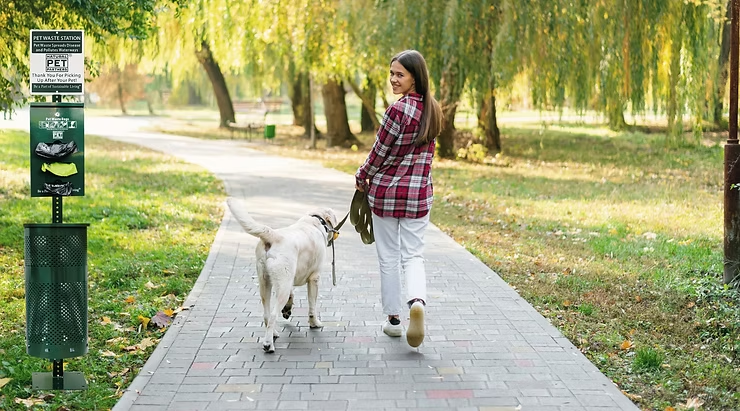
Behavioral research is clear on this. People follow the path of least resistance in their daily environment. When a dog waste station is stocked, positioned conveniently along a walking route, and reliably serviced, residents have the tools they need to clean up after their own dogs. When the station is empty, out of the way, or overflowing, the same resident makes a different decision not because they stopped caring, but because the system stopped supporting the behavior you want.
This is not an abstract concept. It is the operational reality of every high-volume community property. Compliance is a function of station availability, placement, and service reliability. The resident who leaves waste on the ground in January when the station has been overflowing for four days is often the same resident who uses the station reliably in March, when a new service provider is keeping it stocked and clean.
After working with apartment communities and HOAs across the DC metro and Atlanta areas, the same operational breakdowns appear across properties regardless of size, price point, or resident demographics. The complaints look different on each property. The underlying failures are almost always one of three things.
The apartment communities and HOAs with the cleanest common areas and fewest resident pet waste complaints share one operational pattern. They treat pet waste station management as a dedicated, managed service rather than an add-on task for existing maintenance staff or landscapers. This distinction matters more than station brand, bag type, or community demographics.
A dedicated managed service means scheduled visits calibrated to the property's actual usage volume not a fixed weekly pass that ignores seasonal peaks or high-density pet populations. It means service completion notification, so the property manager knows the work was done without having to walk the property themselves. It means a defined response window for issues flagged between scheduled visits. And it means a clear billing relationship where the property manager knows the monthly cost before the invoice arrives, with no surprise charges for restocking overages or emergency calls
Property managers and HOA boards are responsible for controlling costs, managing vendor relationships, and maintaining the conditions that support resident retention. Pet waste management touches all three. The operational math is straightforward when you run it end to end.
The communities that make this shift do not stop having pet owners. They stop having pet waste problems. That is the operational distinction that matters.
Service frequency should be determined by the property's pet population density and foot traffic patterns not by a one-size-fits-all weekly schedule. A high-density apartment community with a large number of registered pets may require servicing multiple times per week during peak seasons. A lower-density HOA may maintain cleanliness on a weekly cadence. A proper service assessment includes a physical inspection of station placement, volume, and usage before a frequency recommendation is made.
General guidance places one station per 50 to 75 pet-owning units as a starting benchmark, with placement prioritized at the natural endpoints of walking routes rather than based on property aesthetics or construction convenience. A professional site assessment will map actual walking patterns and identify coverage gaps before making a placement recommendation. Placement mistakes are among the most common and most correctable drivers of station underuse.
The most common reasons are empty bag dispensers and full waste bins. When either condition is present at the moment a resident needs the station, they make a different decision and that decision becomes easier to repeat. Regular servicing is the direct intervention that keeps stations functional. Education and enforcement address resident intent. Service reliability addresses the environmental conditions that determine whether intent translates into action.
No. A commercial pet waste station service is a dedicated, specialized function that complements your existing maintenance and landscaping operations. CoPS on Doody does not replace residential yard cleanup, landscaping, or general property cleaning. Our role is to help communities keep pet waste stations stocked, serviced, and easier for residents to use.
Prioritize four things: defined service completion reporting so you know the work was done without walking the property yourself; a clear service credit policy for any missed visits; flat-rate monthly pricing with no hidden restocking fees or variable charges; and a no-contract or month-to-month service option that removes the commitment risk of signing with an unproven provider.
Pet waste complaints are one of the most preventable recurring problems in community property management. They persist not because residents are irresponsible, but because the management systems in most communities are not designed to support the outcome they are trying to produce. Enforcement and reminders treat the symptom. Reliable, frequency-appropriate, placement-optimized pet waste station service helps address the cause.
If your property is managing pet waste through a landscaper, a maintenance team, or a service provider who cannot tell you exactly when each station was last serviced the system is the problem. The fix is operational, not behavioral. And the operational change is available right now, with no long-term contract required.



.png)


.png)
.png)

