In neighborhoods built around shared greens instead of private yards, the common area is the yard. CoPS on Doody keeps Gaithersburg's stations stocked and its shared ground clean, on a defined service day and one flat monthly rate.
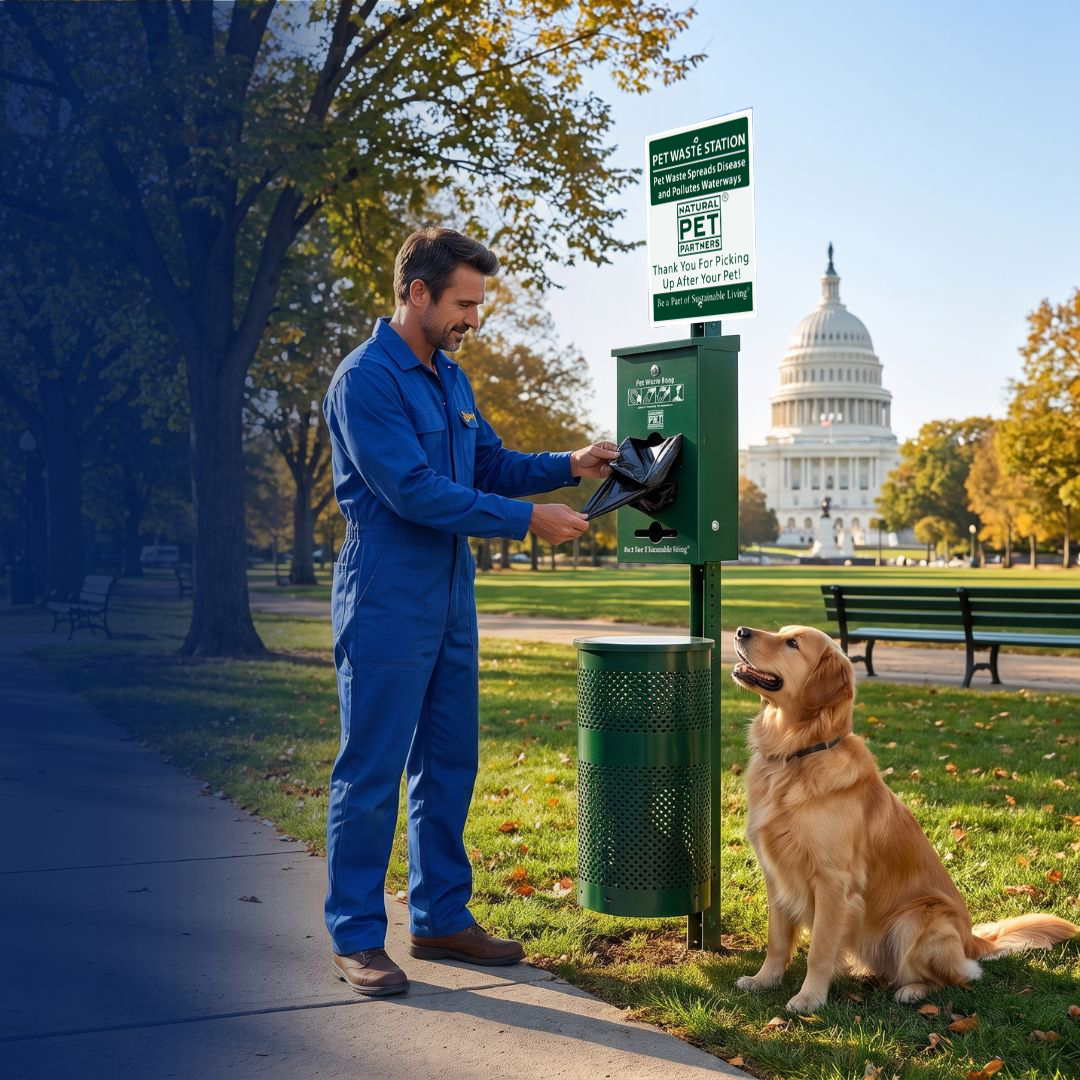
Gaithersburg contains some of the most deliberately walkable neighborhoods in Montgomery County. Kentlands and Lakelands were built on New Urbanist principles compact lots, rear alleys, and generous shared greens, pocket parks, and lakeside paths in place of large private yards. Crown and the Washingtonian corridor follow the same logic at higher density.
The design works beautifully and it concentrates a specific burden. Almost every dog in the community relieves itself on association-owned ground, because that is where the open space is. There is no private back yard absorbing the volume. A single missed week doesn't just look untidy it lands on the green that residents' front doors face, the path they take to the market square, and the park where children play.
Communities built this way cannot treat pet waste as landscaping's side task. It needs its own program.
A station only collects waste from residents who walk to it. In a neighborhood with pocket parks every few blocks, that leaves a lot of ground in between the greens, the alley entrances, the lake path, the tree lawns along the sidewalks.
Two things fix that pattern, and most Gaithersburg communities need both:
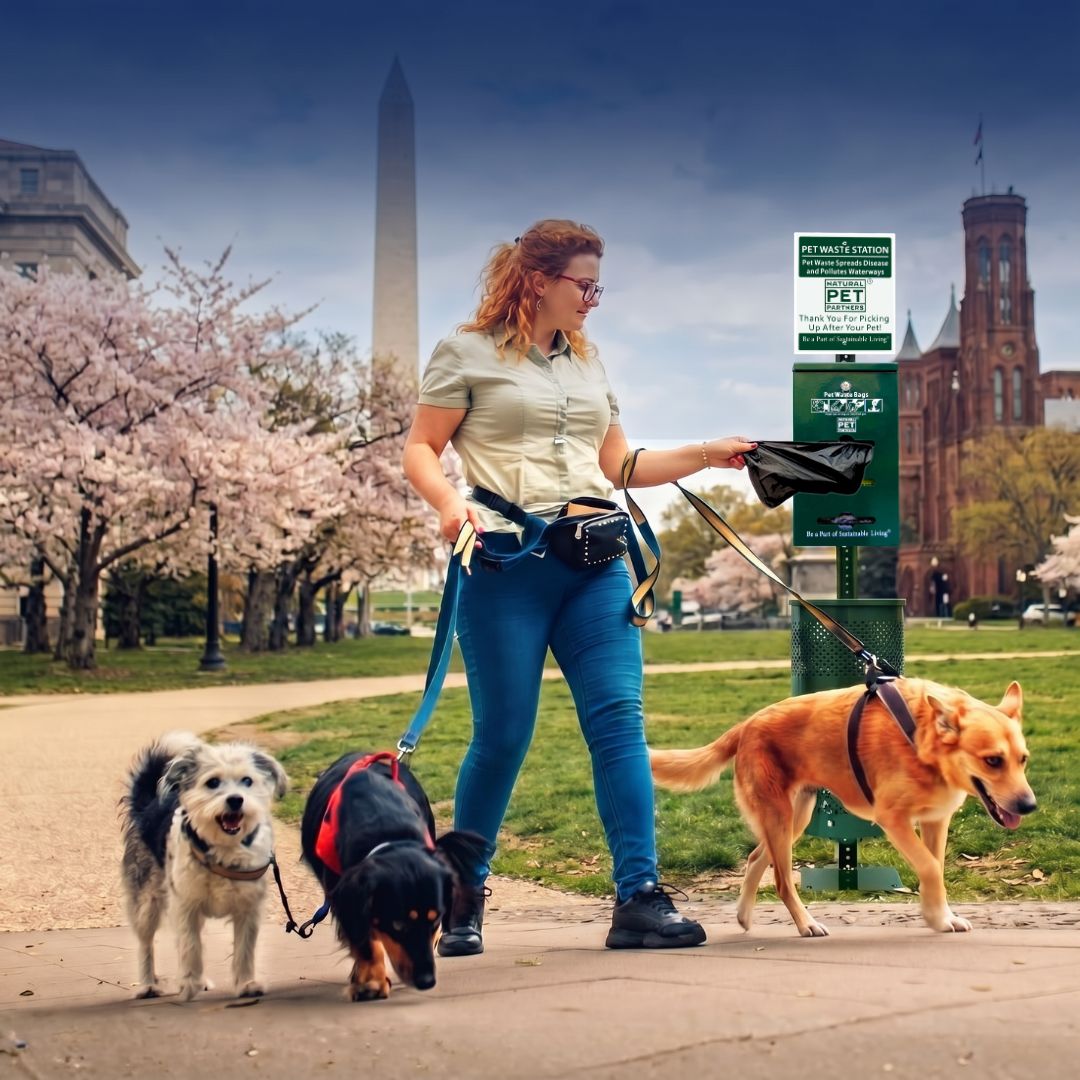
Stations belong at the points where walking routes converge green entrances, path junctions, and alley mouths not tucked where the site plan had room. Convenience is one of the strongest predictors of resident compliance, and in a walkable neighborhood convenience means "on the way," not "nearby."
Scheduled pickup across the greens, pocket parks, and paths themselves, so the shared ground gets cleaned rather than just the six feet around each station.
the visit scope above, on a defined service day.
placement assessment and installation for newer communities expanding coverage.
trails, greens, and relief areas, plus seasonal cleanups.
trails, greens, and relief areas, plus seasonal cleanups.
We serve eligible communities across Gaithersburg Kentlands and Lakelands, Crown and the Washingtonian corridor, Quince Orchard, Olde Towne, and the apartment and condo communities along the I-270 corridor.
For coverage across the rest of the county Rockville, Bethesda, and beyond see our Montgomery County service area page.
Not sure whether your community qualifies? Ask us. Coverage depends on location and site access.
HOAs, condo associations, and apartment communities not backyards.
Station service and common area cleaning under one program, because in these neighborhoods one without the other leaves half the problem.
Predictable enough to publish in a community newsletter.
Labor, bags, liners, and disposal in one written monthly figure.
Communities stay because the greens stay clean.
Trained specifically on pet waste handling.
Dave Jensen, CEO of CoPS on Doody, authored the first continuing education course on pet waste management approved by CAI and CAMICB.
Often yes but placement matters more than count. Stations belong where walking routes converge rather than spread evenly across a map. The assessment produces a placement plan your board or architectural committee can approve.
Station service covers the six feet around each station. Common area cleaning covers the greens, pocket parks, and paths. Communities built around shared open space usually run both.
Bring the placement map and equipment specs from your assessment to the committee. We produce both before anything is installed, precisely because design-guideline communities need to approve appearance and location in advance.
Yes, including the higher-density communities along the I-270 and Washingtonian corridors.
First service begins within 7 days of your signed proposal for communities with existing stations or trash cans.
Contact us and you will have a response within three business hours. If it keeps happening, that's a frequency or placement conversation, and we'll raise it before you have to.
Start by sending a sample address, community boundary map, and existing station or trash can locations. Then we schedule your free on-site assessment and prepare a customized proposal based on your community’s stations, trash cans, layout, and service needs.

Proposal in 72 hours. First service within 7 days of your signed proposal for communities with existing stations or trash cans.

No contract required to start. Month-to-month only.


Your flat-rate monthly cost is confirmed in writing before you commit.
Get a free on-site assessment and a flat-rate proposal within 72 hours.